
5 Tips on Running a WordPress Business Directory
A few tips on managing your business directory website.

Looking for a directory website niche? See 6 profitable ideas for a WordPress directory site, backed by real market data.

The successful directory website niches are usually hiding in plain sight: a service people search for locally, again and again, that no single website has bothered to organize into one place. Vintage furniture restorers in one region, mobile dog groomers in one metro, a repair shop that actually knows your specific brand of espresso machine. Someone eventually builds the directory for it, and that person is rarely the biggest name in the space. It’s whoever noticed the gap first.
Get the niche right, and the rest gets easier: you launch faster, you rank sooner because you’re targeting specific search terms the big, broad platforms never bothered to compete for, and businesses show up already willing to pay for the visibility. Get it wrong, and no amount of good design saves a directory nobody was searching for. This article covers how to spot a niche worth building, then six specific ideas for 2026, each backed by real demand data, a way to build it on WordPress with HivePress, and a clear answer for how it earns money.
First things first, though: before you pick a niche, it’s worth knowing if you’re even building on the right platform. There’s a Reddit thread on r/Wordpress asking exactly this that’s pulled in over 200 comments, and the opinions run in every direction. It’s a genuinely good conversation to skim if you want the full range of takes.
WordPress isn’t a single product anymore. It’s an ecosystem of themes, plugins, and hosting setups that can be configured for almost any use case, including a directory, a marketplace, or a booking platform, all running on the same core system. That flexibility is the real advantage over hosted, all-in-one builders: you’re not locked into features a platform vendor decided to ship this quarter, and you own your data outright.
It’s also more approachable than its reputation suggests. The block editor makes day-to-day page and content management straightforward even without a developer background, and a purpose-made directory plugin like HivePress handles the harder, directory-specific parts right out of the box.
Verdict: if you’re building something you plan to own and grow for years, WordPress paired with a directory-specific plugin is still a practical, defensible choice in 2026. If you just need five static pages you’ll never touch again, a hosted site builder is faster and cheaper.
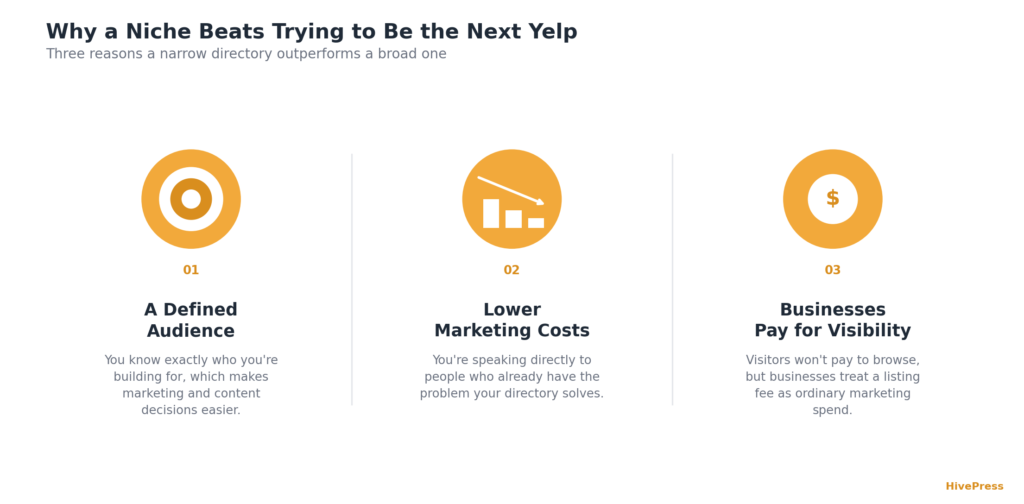
Here’s the mistake most beginners make: they pick a directory idea broad enough to compete with giants like Yelp or TripAdvisor. That’s not a realistic fight. Those platforms have years of listings, brand recognition, and search authority you can’t out-market your way past.
Another article about building a profitable directory website makes a similar point: successful directories usually don’t try to cover everything. They focus on a narrow niche, become the go-to resource in that space, and use Google to attract visitors who are already searching for those specific services.
| Niche | Why it works | How it earns | Build it with |
| Neighborhood & hyperlocal directories | Most needs are met within a few blocks, not citywide | Claimed + featured listings, sponsored newsletter/event placements | ListingHive + Reviews, Messages, Favorites, Geolocation extensions [all free] |
| Doula & birth coaching directories | Growing market, no dominant national platform | Provider membership fees, booking commission, featured placement, paid profile access | MeetingHive |
| Tiny house & ADU contractor directories | Housing affordability pressure, hard-to-find specialists | Paid contractor profiles, project commission, lender/supplier affiliate deals | ExpertHive |
| Senior & home caregiver directories | Strong demographic tailwind toward aging in place | Caregiver membership subscriptions, commission on booked care hours | MeetingHive |
| Wedding directories | A steady, high-volume market | Membership tiers, featured placement, booking commission | RentalHive |
| Sustainable & eco-friendly business directories | Buyers want pre-filtered, vetted options | Paid contractor profiles, membership tiers, sponsored content | TaskHive |
What it is: a directory that brings together local businesses, service providers, events, and resident profiles for a single neighborhood or small town, instead of trying to cover an entire city.
Why it works: in a big city, almost everything you need already exists within a few streets of home. Nobody wants to dig through a citywide search to find a dentist three miles away when there’s a better option two minutes from home. A neighborhood directory organizes exactly that: what’s actually near you, not what happens to rank citywide.
How you earn: claimed listings, featured listings to highlight businesses that want to appear first in search results, and sponsored newsletter or event placements once traffic builds.
Build it with: ListingHive, HivePress’s directory-focused theme, paired with the Reviews, Messages, Favorites, and Geolocation extensions, all free.
What it is: a directory connecting expecting families with doulas, birth coaches, and postpartum support providers, filterable by service type, location, and specialty.
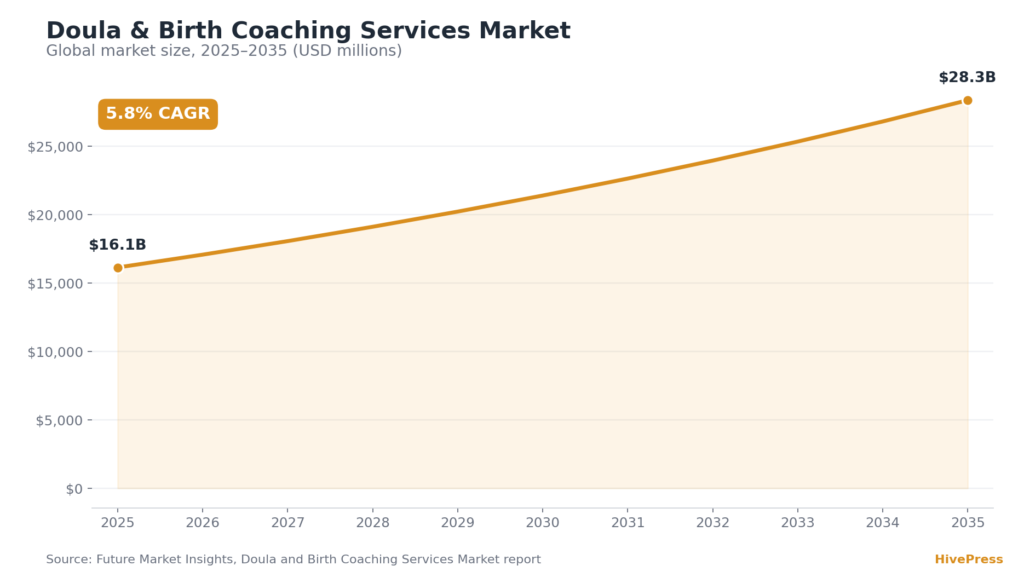
Why it works: let’s be honest about the underlying demand here. Birth rates are declining in many countries, but people are not going to stop having babies, and the families who do will increasingly want personalized, non-hospital support through the process. The market reflects that: it’s projected to nearly double by 2035, according to the market report from Future Market Insights. At the same time, most doulas operate independently or through small regional networks, with no dominant national platform. Real demand plus fragmented supply is exactly what a niche directory is built to solve.
How you earn: families typically book a specific doula for ongoing support rather than a one-off transaction, so a booking-enabled directory earns more than a static listing page would. Charge providers a membership fee for a searchable profile, take a commission on confirmed bookings, sell featured placement to providers who want to appear first in a city’s results, or simply charge users a fee to unlock full profiles and contact details. If you’ve done the work to gather a strong founding roster of well-reviewed doulas, families will pay for access to that curated list rather than start their search from zero.
Build it with: MeetingHive, built around scheduled consultations and availability, a natural fit for a service that’s booked in advance and delivered over multiple sessions.
What it is: a directory of contractors, designers, and modular home builders who specialize in tiny houses and accessory dwelling units (ADUs), organized by region, since building rules vary widely by location.
Why it works: this niche sits on top of a housing affordability problem playing out well beyond any single country. Home prices have climbed far faster than incomes in recent years, you can see the scale of that gap in the Census Bureau’s housing data, and it’s pushing both first-time buyers and downsizing retirees toward tiny homes as a genuinely affordable, owned alternative to renting. It’s not a fringe trend: the tiny homes market is on a solid growth trajectory over the next several years, and several US states have started backing the shift directly, offering ADU construction grants worth tens of thousands of dollars per household.
People increasingly want an affordable, owned home instead of a rental, and tiny houses are becoming one of the more realistic paths there. But finding a contractor who specializes in small-footprint, code-compliant builds is genuinely hard. A directory that gathers vetted specialists by region solves that problem.
How you earn: paid contractor profiles, commission when a project gets purchased through the platform, and affiliate partnerships with lenders, material suppliers, or ADU kit manufacturers.
Build it with: ExpertHive, designed around service-provider profiles with credentials, portfolios, and service areas. Well suited to a category where licensing and past project photos build trust.
What it is: a directory connecting families with vetted in-home caregivers, home health aides, and senior care specialists, searchable by service type, availability, and location.
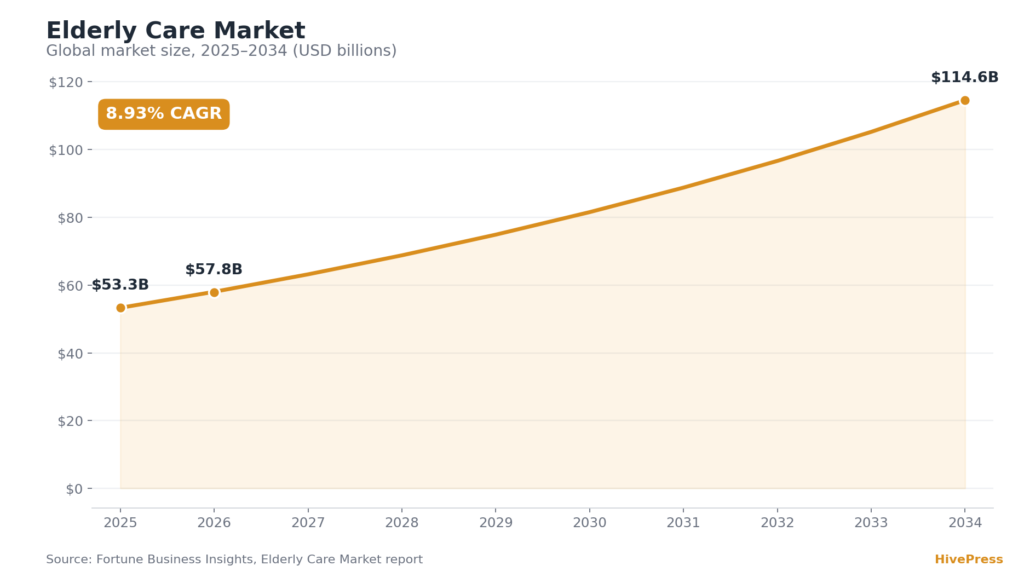
Why it works: the demographic pressure behind this niche is hard to overstate. The global elderly care market was valued at $53.29 billion in 2025 and is projected to reach $114.57 billion by 2034. Within that market, home care is the fastest-growing segment, as more seniors choose to age in place rather than move into institutional care. That preference creates steady, ongoing demand for a specific thing: families searching for a trustworthy, local caregiver on short notice, usually with limited time to vet options themselves. A directory that pre-screens and organizes providers by specialty and availability removes exactly that friction.
How you earn: caregiver membership subscriptions for a searchable profile, plus commission on booked care hours for families who complete a match through the platform.
Build it with: ListingHive paired with the Messages extension for direct contact, or MeetingHive if you want families to book specific caregiver visits directly through the site.
What it is: a directory of photographers, florists, venues, and caterers, filterable by location and budget, built for the short, intense planning window each couple goes through rather than for repeat visits.

Why it works: unlike a neighborhood or caregiver directory, wedding directory visitors aren’t recurring users. A couple researches hard for a few months, books everyone, and leaves for good. That compresses demand into a predictable calendar: engagement season drives early research traffic, and it peaks again ahead of the spring/fall dates most couples book.
That same compressed timeline shapes how they shop, too: with only a few months to vet a dozen vendors, couples default to fast visual judgment over reading a lot of text. Vendors are effectively selling an aesthetic, and buyers decide partly on gallery photos before they ever read a description. A directory built around large photo galleries fits that shopping behavior better than a standard text-heavy listing would.
How you earn: membership tiers, featured placement for premium vendors, and commission on bookings made through the platform.
Build it with: RentalHive, built around large visual galleries rather than dense text listings. A natural fit for a category where photos do most of the selling.
What it is: a directory of vetted eco-conscious businesses (contractors, retailers, cleaning services) for consumers who specifically want to support sustainable options.
Why it works: this isn’t a fringe preference anymore, it’s mainstream purchasing behavior backed by real spending. Consumers spent an estimated $230 billion on sustainably marketed products in 2025, accounting for roughly a quarter of all consumer retail spending. Globally, 80% of consumers say they’re willing to pay more for sustainably produced or sourced goods, even amid inflation and cost-of-living pressure.
That willingness skews even higher among younger buyers, with Gen Z and Millennials consistently the most likely to seek out sustainable options. What this audience lacks isn’t motivation, it’s a fast way to find businesses that actually back up the claim. They don’t want to sift through every local business to find the sustainable ones, or take a company’s word for it; they want someone to have already filtered and verified that list for them.
How you earn: paid vetting or certification badges for listed businesses, membership tiers, and sponsored content partnerships with sustainability-focused brands.
Build it with: TaskHive, oriented around service-based listings and task requests. A good fit for a directory where visitors are often comparing quotes for a specific job rather than just browsing.
These six ideas are meant to spark your imagination, not limit it. We live in a consumer’s world: there is very likely already an idea in your own city, industry, or community waiting for someone to organize it into a searchable directory. Maybe it’s local tutors, maybe it’s independent movers, maybe it’s something specific to where you live that a national platform will never bother building.
Every idea from the list above can come to life on WordPress, with HivePress and its products, monetization, and a theme suited to that specific niche layered on top. None of them need custom development to get off the ground. And it isn’t limited to this list. HivePress is a multipurpose directory plugin, so whatever niche you land on, that same foundation can be shaped around it. The niche is yours to find. The build is one WordPress install away.
Yes, provided it’s built with a purpose-made directory plugin rather than a patchwork of unrelated tools. The ecosystem behind WordPress, themes, plugins, hosting options, remains the deepest of any CMS on the market, and that depth is exactly what makes it worth building a long-term project on. WordPress paired with a directory plugin like HivePress gives you all necessary directory features out of the box, while still letting you control hosting, data, and long-term costs.
Most directories combine a few models rather than relying on just one: commissions on completed bookings or purchases, featured or promoted placements, display advertising, affiliate partnerships, and membership or subscription fees for enhanced listings. You don’t need all of them on day one, and you also don’t need to launch free. Charging too aggressively before you have enough traffic or listings to justify it is one of the more common reasons a new directory stalls. Start modest instead, a small one-time fee to submit a listing, or waived commissions for your first batch of users to build up trust and momentum, then introduce additional models and raise pricing gradually as demand proves itself.
Honestly, the one you’re genuinely interested in or passionate about. That interest is what keeps you writing, researching, and improving the directory long after the excitement of launch day wears off, and it shows in the quality of the categories and content you build.
If nothing comes to mind right away, be pragmatic instead: look for a real pain point in a market you already understand, and check if a directory is actually the right way to solve it. Use the niches in this article as a starting point, either by building one of them directly or by applying the same logic to find something closer to home.

A few tips on managing your business directory website.

Learn 3 ways of how to make money with your classified ads website.

A few tips on how to choose a niche for your future micro-jobs website.