
Directory Website Niche Ideas for 2026 (And How Each One Makes Money)
Looking for a directory website niche? See 6 profitable ideas for a WordPress directory site, backed by real market data.

A list of 7 proven monetization strategies for WordPress directory websites.

Previously, we published a tutorial on how to create a directory website with WordPress. Now we would like to talk about the most practical ways to monetize a directory website and help you pick what fits your specific case.
This isn’t a get-rich-quick breakdown, but following some of these monetization strategies can help you achieve recurring revenue and a decent ROI from all the hard work you put into your website.
So, let’s dive in without wasting time!
Before you learn how to monetize a WordPress directory website, a few things need to be in place:
Also worth reading: our article on the most common mistakes people make when building a WordPress listing website. Some of them directly affect your chances of monetizing it successfully.
Not every directory plugin is built with monetization in mind. Before committing to one, it is worth checking that it covers the models you plan to use, plays well with payment gateways, and does not lock you into a rigid structure. Here is what to look for:
To show how each model works in practice, we’ll use the HivePress directory and listing plugin and its extensions throughout this article. Some are free, some are premium, but every strategy below has a concrete implementation path.
The most direct model: businesses pay to have their listing appear on your directory. This works well when your directory has a defined audience that vendors actually want to reach: a local contractor finder, a niche B2B services directory, a city restaurant guide. The value to the vendor is visibility, and you charge for that.
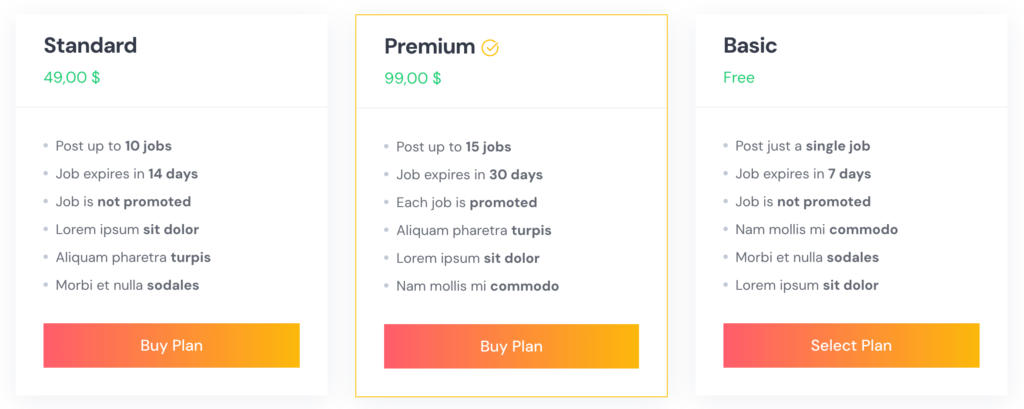
You can offer this as a monthly subscription or a one-time fee for a fixed display period. Subscriptions tend to work better for directory revenue because they create predictable recurring income and keep vendors invested in keeping their listings updated.
The key condition is that vendors need to believe your directory is worth paying for. If your site gets meaningful traffic in a niche they care about, that case is easy to make. If not, build the audience first.
The following screencast demonstrates how to monetize your platform by charging users for listing submissions.
Most vendors in your directory want one thing: to be seen before everyone else. Featured placement sells exactly that.
Vendors pay a fee to have their listing pinned to the top of search results and category pages, visually set apart from standard results. Featured status is time-limited, so vendors who see results from it tend to renew. The more listings your directory has per category, the more this placement is worth.
Check the video below to see how to set it up in practice.
Some directories are more valuable on the visitor side than the vendor side. Job boards are the obvious example: companies pay to see candidate profiles, not to be listed. The same logic applies to supplier directories, specialist professional networks, or any directory where the listings themselves contain information people would pay to access.
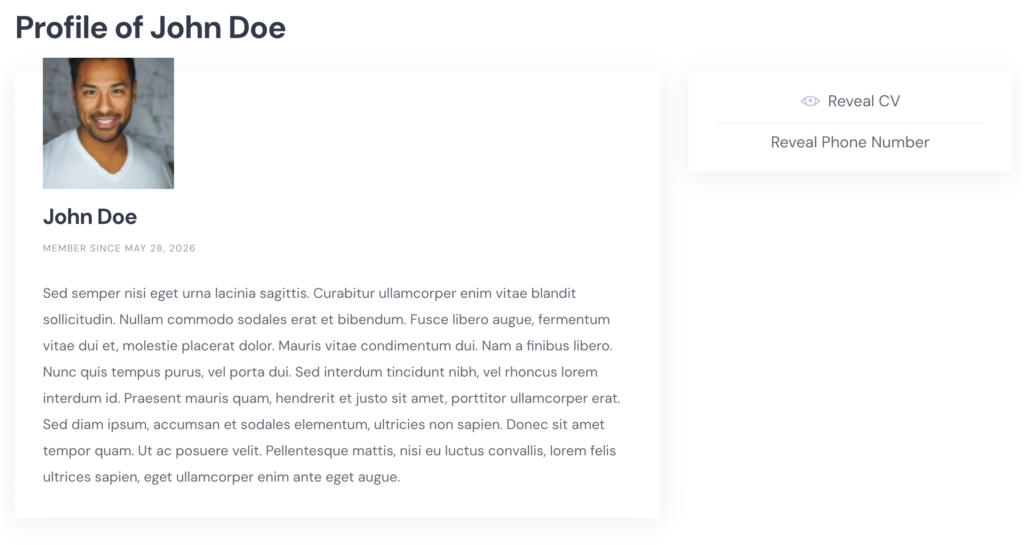
Restricting access to listings or contact details can work in two ways, depending on what your directory offers.
Restrict specific listing attributes: You can hide phone numbers, email addresses, or website links behind a plan. Visitors see that a listing exists and can read the public details, but they cannot contact or act on it without upgrading. This creates a clear incentive to convert without hiding your content entirely.
Restrict entire pages. Category pages, or any other page on your site can be made accessible to paying users only. This works best when the directory itself is the product: a curated database of leads, a private supplier network, or a professional community where access is the value.
All three monetization options above: charging vendors to post, featuring listings, and restricting visitor access can be handled with a single HivePress directory and listing plugin extension — Memberships. You can create separate plans for vendors and visitors, or combine them into a single package, without needing multiple plugins.
If your directory is modeled on something like Yelp or TripAdvisor, claiming is a natural monetization layer. The idea: you seed the directory with listings yourself, then businesses find their own listing and pay a fee to claim it. Once approved, they get control over editing details, responding to reviews, viewing stats, and receiving messages.
There is a practical side benefit here too. A claimed listing is a maintained listing. A business owner who paid to be there will fill out every field, add photos, and respond to inquiries. That improves the quality of your directory for visitors without any extra effort on your part.
HivePress handles this with the free Claim Listings extension. Businesses submit a claim, you review and approve it, and ownership transfers automatically.
The following screencast shows how to monetize listing claims with HivePress.
If your directory covers services or bookable slots, you can go beyond charging for listings and take a cut of each transaction.
Service and product sales: You can turn your directory into a marketplace where vendors sell services or digital products directly through the platform, and you earn a commission on each sale, similar to how Fiverr or Creative Market work. You can charge a percentage, a flat fee, or both, and apply it to the vendor, the buyer, or both sides of the transaction. This can be done with the Marketplace extension, which integrates with WooCommerce, creates a product for each listing, and calculates vendor earnings automatically.
This works best for service directories where the purchase decision happens quickly (creative work, consulting, digital downloads) rather than high-consideration purchases that take time.
Bookings: The same commission logic applies when vendors offer time-based services. With the Bookings extension, you can create a website like Airbnb or any other booking platform where users reserve slots and pay through your site. You are not limited to accommodation: equipment rental, appointment booking, fitness classes, or consulting calls all follow the same pattern.
Commission-based models have a higher revenue ceiling than flat listing fees if your directory generates real transaction volume.
Advertising is probably the most familiar monetization model for web publishers, but on a directory it is usually a secondary revenue stream rather than the primary one. Still, it is worth considering, especially in combination with other models.
Platform ads: Integrating with Google AdSense or another advertising platform and earn money by displaying ads in different areas of your site. The revenue per visitor is low, so this only becomes meaningful at higher traffic volumes — typically 50,000+ monthly page views. At lower volumes, it generates background income at best.
Here are simple instructions from Google that you can follow in order to easily integrate your WordPress directory with Google AdSense and automatically display ads on your site.
Direct banner sales. Selling ad space directly to advertisers is more profitable because you cut out the intermediary. It also lets you charge category-specific rates: a banner in your “plumbers in Chicago” section is worth more to a plumbing supply company than a generic display ad. If your directory has a clearly defined audience, direct sales are worth pursuing once you have a contact list of relevant advertisers.
However, beware of displaying too many ads on your directory. The user experience should be your first priority and plenty of ads could lead to negative consequences, such as a high bounce rate. Try to find a balance between making money from the website and keeping your directory useful for your visitors.
If your directory covers a niche where your audience regularly buys specific products, software tools, equipment, books, hardware, you can add affiliate links to relevant listings and earn a commission on purchases. A directory of marketing tools that links to each tool’s signup page with an affiliate parameter can generate meaningful passive income if the audience is engaged. This works best when the affiliate relationship feels natural: the listing page is already describing the product, so a “visit site” link with an affiliate parameter is a small addition with no friction for the visitor.
As you see, there are at least 7 different ways of monetizing a WordPress directory website, but it’s important to choose the best way of monetization according to the type of directory you’re building. If your site already gets solid traffic, selling advertising space is the lowest-friction starting point. If the value is in the listings themselves, charging for posting, featuring, or claiming makes more sense. And if transactions happen between vendors and buyers, building a niche marketplace and taking a commission is worth considering.
One thing applies across all models: do not try to monetize before your directory is useful. Focus on building something people actually want to use and driving traffic to your directory first — revenue follows from that, not the other way around.

Looking for a directory website niche? See 6 profitable ideas for a WordPress directory site, backed by real market data.

Proven strategies on driving traffic to your WordPress website.

Learn 3 ways of how to make money with your classified ads website.